Remediation protocols differ significantly between isolated single-room infestations and multi-unit structural migrations. In historic brick row houses throughout Quaker Hill and Baynard Village, shared party walls…
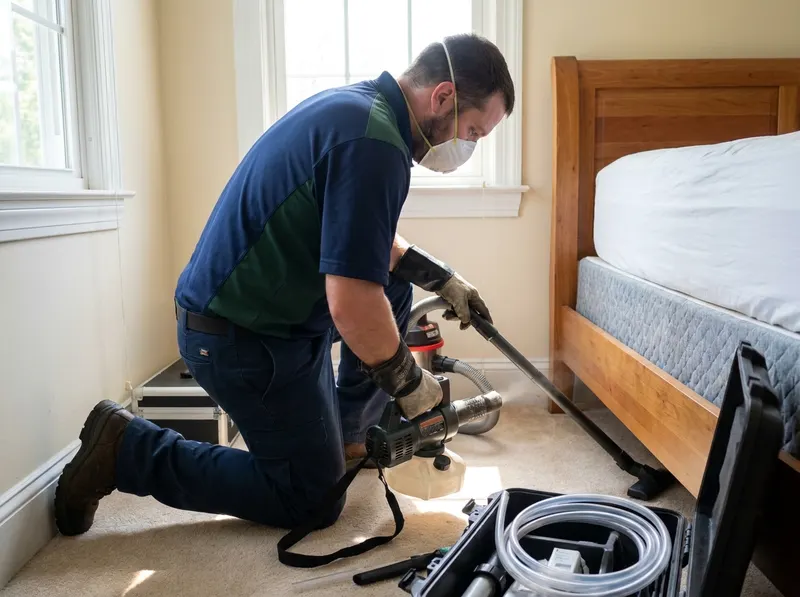
Remediation protocols differ significantly between isolated single-room infestations and multi-unit structural migrations. In historic brick row houses throughout Quaker Hill and Baynard Village, shared party walls allow bed bugs to disperse through electrical conduits and floor joists. A localized spot treatment addresses isolated furniture contamination, whereas whole-structure thermal remediation is required when specimens penetrate adjoining wall cavities. Thermal processing maintains ambient air temperatures between 120°F and 135°F for a minimum of 90 minutes, denaturing insect proteins across every life stage, including eggs. When room configurations or heat-sensitive belongings preclude thermal applications, targeted residual applications create barrier perimeters that interrupt the biological reproduction cycle without broad-spectrum aerosolization.
Home architecture in Forty Acres, Cool Spring, and the Highlands presents specific harborages inside decorative plaster moldings, original heart-pine flooring, and radiator surrounds. Interventions prioritize botanical or low-toxicity desiccant dusts, such as amorphous silica gel, inside wall voids and behind electrical outlet faceplates. This mechanical approach erodes the insect's waxy outer cuticle, causing rapid dehydration without introducing volatile organic compounds into sleeping spaces. Pets and occupants vacate during active heat or liquid applications, with re-entry permitted four hours post-treatment once surfaces dry and indoor air quality stabilizes.
Eradication success relies on systematic diagnostic staging. Step one involves an exhaustive physical audit using high-lumen illumination to inspect mattress seams, box spring dust covers, and baseboard junctions within an eight-foot radius of resting areas. Step two requires targeted prep work: laundering all bedding and fabrics in water temperatures exceeding 120°F followed by high-heat drying for 30 minutes. Step three executes the selected remediation protocol, utilizing calibrated convection heaters or micro-injector crack-and-crevice equipment. Step four establishes follow-up monitoring with passive interception devices placed beneath furniture legs to verify complete population collapse over a 14-to-21-day incubation window.
Every job gets a firm, written price after a free on-site visit.
Tell us about your bed bug remediation job in Wilmington and we'll send a clear, written quote, usually the same day.
 Tavren Exterminators