Carpenter ant management in Wilmington requires distinguishing cosmetic trailing insects from structural satellite colonies embedded in damp studs, subflooring, or sill plates. Unlike subterranean termites that consume…
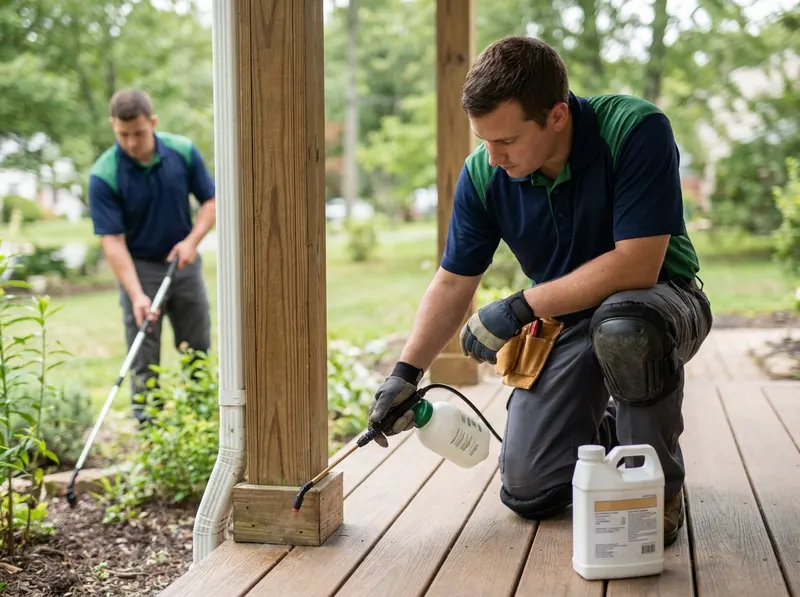
Carpenter ant management in Wilmington requires distinguishing cosmetic trailing insects from structural satellite colonies embedded in damp studs, subflooring, or sill plates. Unlike subterranean termites that consume wood cellulose, carpenter ants hollow out smooth galleries along softened grain solely for nesting, leaving behind distinctive piles of fibrous wood shavings mixed with insect fragments known as frass. In older architectural corridors such as Quaker Hill and Highlands, historic hemlock and white pine framing frequently absorb ambient humidity from rubble stone foundations or aging roof valleys. A perimeter surface spray only kills 5% of foraging worker ants, leaving the reproductive queen and interior satellite clusters fully active inside wall voids. Effective management instead utilizes non-repellent transfer actives that worker ants unknowingly carry back through structural conduits into the heart of the colony, achieving complete eradication across 14 to 21 days without aerating toxic synthetic pyrethroids into family living areas.
Property construction style dictates specific treatment methods across Wilmington neighborhoods. Historic brick-and-timber residences in Brandywine Village and Cool Spring often exhibit satellite ant activity in window lintels and unvented basement crawl spaces, where minor flashing failures generate wood moisture levels above 18%. Conversely, newer residential framing in Baynard Village or townhomes along the Riverfront typically develop issues near synthetic exterior stucco transitions, exterior deck ledger boards, or flat-roof scuppers. Technicians assess outdoor parent colonies nesting within aged shade trees, common around Brandywine Park and Rockford Park, and trace aerial utility lines or overhanging branches that provide bridge points directly to upper attic eaves in Forty Acres and Wawaset Park.
Selecting localized void injection versus comprehensive multi-tier perimeter control depends on the physical distribution of activity. Single-point sightings near a bathroom plumbing vent warrant localized aerosolized desiccant dusting and plumbing collar sealing, minimizing chemical application and keeping costs near the $150 minimum threshold. Heavy parent-satellite networks spanning detached garage framing and second-story roof trusses require a dual interior void treatment coupled with an exterior liquid barrier along the structural perimeter. The operational trade-off centers on non-toxic drying agents versus residual outdoor barriers: desiccant dusts physically erode the ant's protective wax cuticle for permanent void protection but require physical drilling into unpainted drywall, whereas liquid perimeter treatments maintain active exclusion boundaries for 90 days without altering wall finishes.
Every job gets a firm, written price after a free on-site visit.
Tell us about your carpenter ant management job in Wilmington and we'll send a clear, written quote, usually the same day.
 Tavren Exterminators